



IGCSE in one minute: a clear definition
IGCSE stands for International General Certificate of Secondary Education. In simple terms:
- It’s an international qualification (usually taught in English).
- Students normally take it at 14 – 16 years old, across Years 10 and 11.
- It’s a subject-by-subject qualification: your child earns an IGCSE in each subject (e.g., Maths, English, Biology).
- It’s widely used in international schools and British-curriculum schools around the world.
Cambridge International describes Cambridge IGCSE as the world’s most popular international qualification for 14 – 16 year olds, aligned in standard with GCSEs taken in England, and offering a choice of 70+ subjects.
You’ll often hear “IGCSEs” used as shorthand for the Key Stage 4 programme (the final two years of compulsory secondary schooling in the UK pathway), because in many British international schools IGCSE is the qualification students work towards in those years.
A quick “parent translation”
If your child is entering the IGCSE stage, it usually means:
- More academic depth, especially in core subjects.
- Clear exam specifications (what will be assessed and how).
A stronger need for study habits, revision routines and exam technique because results are often driven by end-of-course assessments.
Where do IGCSEs come from and who offers them?
Origins: why “international” exists
The “international” in IGCSE matters because it was designed to work across different countries and school contexts, while keeping the academic rigour associated with the British curriculum.
Cambridge International notes it created Cambridge IGCSE more than 30 years ago, and positions it as a flexible curriculum with a wide range of subjects and multiple ways to succeed.
Exam boards: Cambridge is common, but not the only one
In everyday conversation, families say “IGCSE” as if it were a single thing, but the exam board (the awarding organisation) matters.
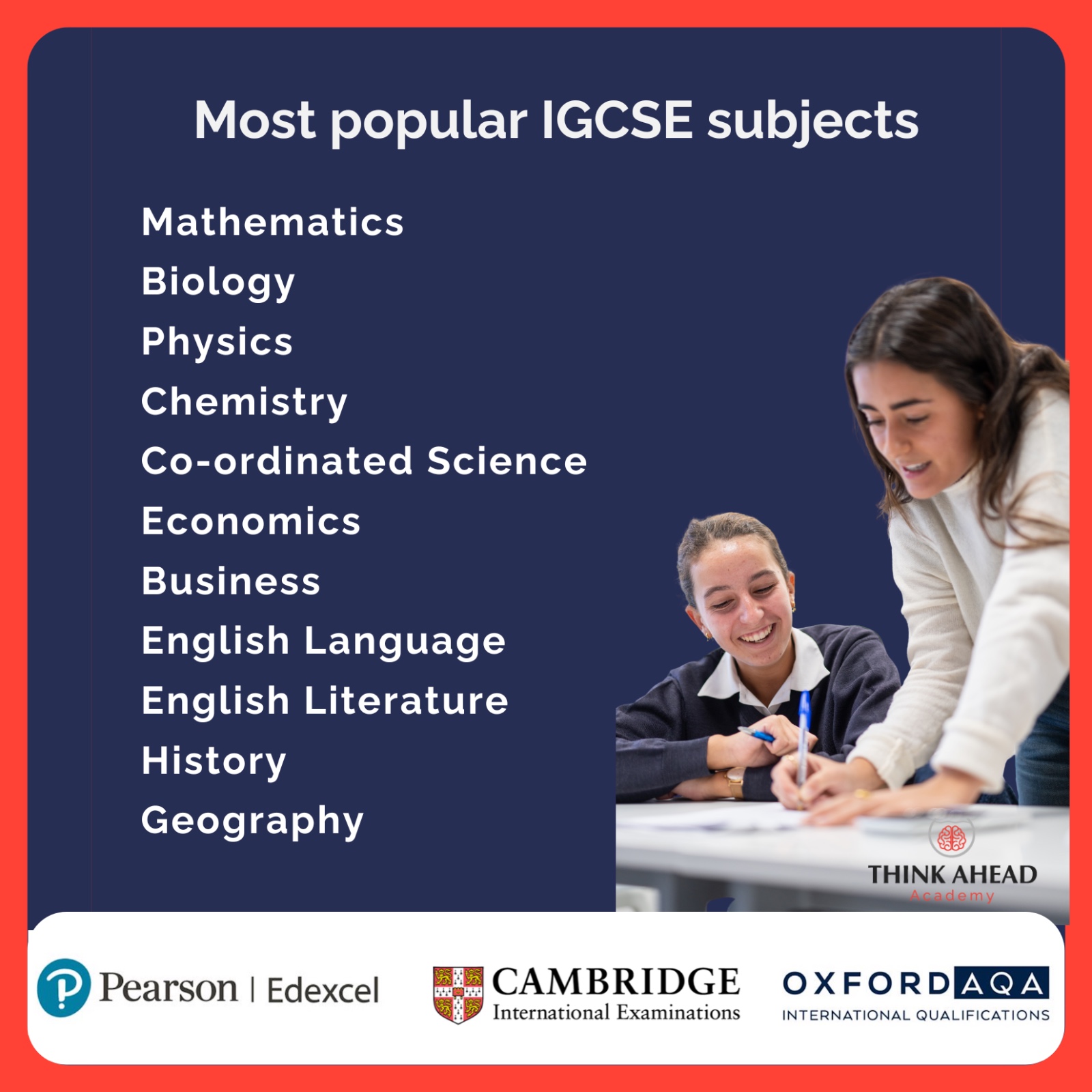
Common options include:
- Cambridge International (Cambridge IGCSE)
- Pearson Edexcel International GCSE
- OxfordAQA International GCSE (in some regions/schools)
For example, Pearson states its Edexcel International GCSEs are aimed at 14–16 learners, available in 37 subjects, studied in 80+ countries, and “accepted by universities globally”.
A very important nuance (often missed)
In the UK regulatory context, GCSEs and International GCSEs are not the same qualifications.
Ofqual (the UK qualifications regulator) has stressed that GCSEs and International GCSEs should not be used interchangeably where precise comparability is required, and that it’s not possible to compare the standards with precision in a single universal way.
What does this mean for parents?
It doesn’t mean International GCSEs are “worse”. It means:
- exact comparability can be complex;
- the board, subject and specification matter;
- and universities/employers are generally used to assessing many different qualifications.
Where IGCSE fits in the British education system
Parents usually understand the British education system best when it’s mapped by age and stage:
Key Stage 4: Years 10 – 11 (the IGCSE “window”)
The UK government’s national curriculum overview places Key Stage 4 at:
- Year 10 (age 14 – 15)
- Year 11 (age 15 – 16)
And it notes that many pupils take GCSEs during this stage.
In international British-curriculum schools, this “GCSE stage” is commonly delivered as IGCSE instead, especially when the student body is international and the school follows international specifications.
What this looks like in real school life
Typically, during Years 10 – 11:
- Students choose a set of subjects (often 6 – 10, depending on the school).
- There are core subjects plus options that shape the student’s profile.
- The pace increases: teachers begin to work very explicitly towards the assessment objectives and exam-style questions.
If you’re a parent who likes visibility and structure, this stage can be reassuring because it has:
- clearer “goal posts” (specifications, grade descriptors),
- and more standardised assessment components than many purely internal systems.
IGCSE equivalent in Spain: how it compares to ESO
The phrase “IGCSE equivalent in Spain” usually comes up for one of two reasons:
- A family wants to understand academic level (not paperwork).
- A family wants to understand official recognition / validation (paperwork).
Academic level: the “rule of thumb” comparison
Spain’s Educación Secundaria Obligatoria (ESO) is compulsory secondary education. Official Spanish sources describe it as four academic years, normally between 12 and 16 years old.
Because IGCSE is typically 14 – 16, it broadly overlaps with the final part of ESO. Cambridge IGCSE is explicitly designed for 14 – 16.
So, as an age-and-stage comparison, it’s common to map:
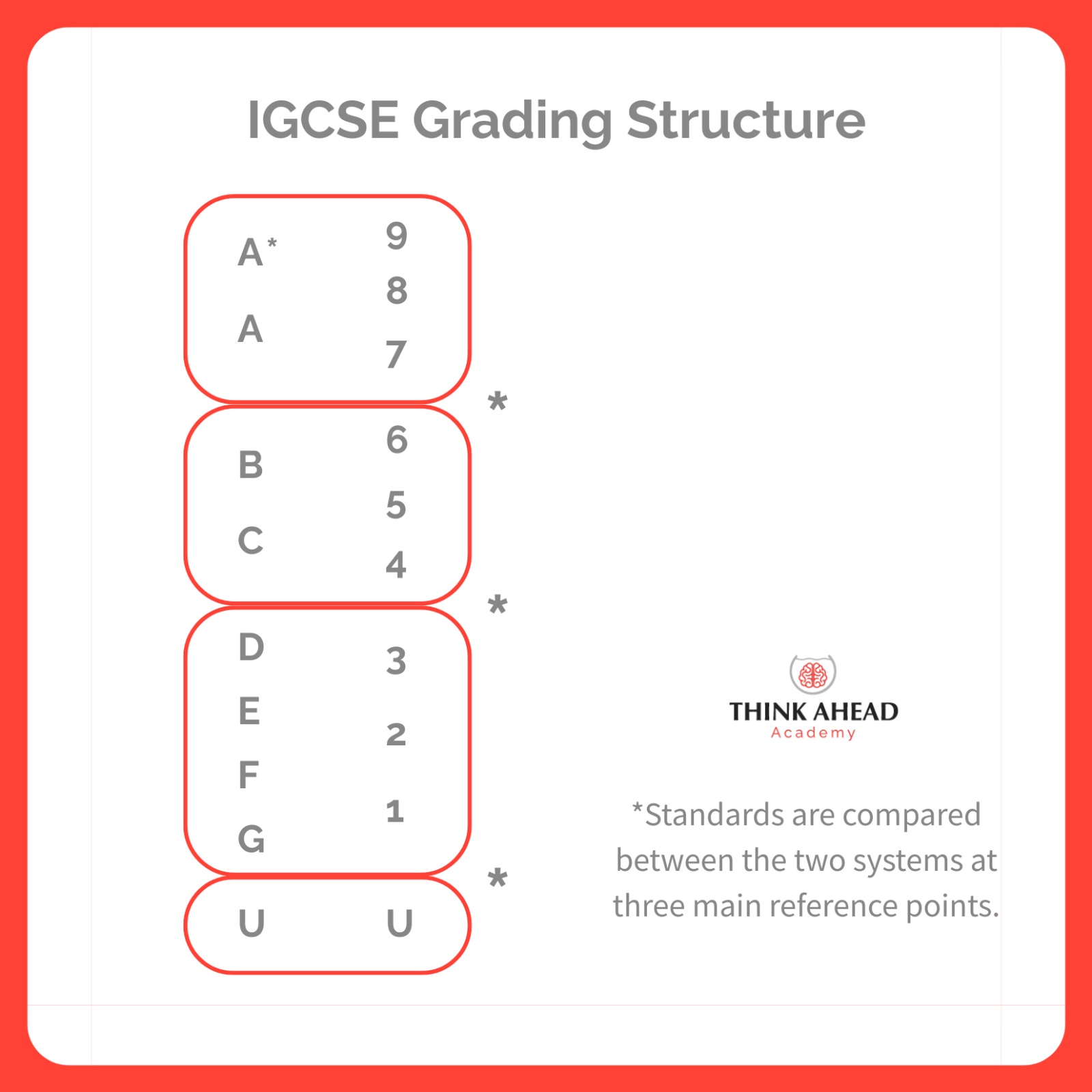
- Year 10 (14 – 15) ≈ 3º ESO
- Year 11 (15 – 16) ≈ 4º ESO
Many British schools and international schools in Spain publish similar equivalence charts as guidance for families.
Official recognition in Spain: “convalidación” and “homologación”
If the question is “Will Spain officially recognise these studies?”, the best reference is always the Spanish Ministry of Education guidance.
The Ministry explains:
- Homologación: declaring equivalence to Spanish titles/diplomas in the current system.
- Convalidación: declaring equivalence to continue studies in a Spanish school.
And for formal processes (documentation, legalisation, official translation), it provides specific requirements and documentation rules.
A practical point many families don’t know (especially post‑Brexit)
The Ministry’s Brexit-related guidance notes that:
- It remained possible to request recognition/validation of UK non-university qualifications after 1 January 2021 (under updated conditions).
- Students joining Spanish Primary or ESO (1º – 4º ESO) generally do not need to carry out a formal convalidación procedure just to enrol, meaning schools can place students without that bureaucracy.
Parent takeaway:
If you’re simply moving schools and continuing education, the process can be lighter than families fear, but if you need an official credential, you should follow the Ministry’s route and requirements.

We’ll call you!
How IGCSE assessment works: exams, coursework and practicals
One of the biggest differences parents notice is assessment style.
Cambridge states that Cambridge IGCSE assessment takes place at the end of the course, and can include written, oral, coursework and practical assessment (depending on the subject).
Pearson highlights that International GCSEs are designed to build skills and knowledge for progression to A Levels and beyond, and it presents them as globally recognised and accepted by universities.
What “end of course” assessment changes for students
It tends to change how students must study:
- Longer planning horizon: revision can’t be left to the last minute.
- Technique matters: students need to understand mark schemes, command words and time management.
- Consistency matters: small gaps in understanding can become big grade gaps under timed conditions.
Exams vs continuous assessment: a realistic parent perspective
Some families love the clarity of exams. Others worry about pressure.
A balanced view is:
- Exams can be demanding, but they are also transparent: students know exactly what counts.
- Coursework/practical components (where they exist) reward process, not just performance on a single day.
A good school and good support at home doesn’t treat IGCSE as “two years of stress”, but as “two years of building skills and confidence”.

Educational benefits of IGCSE: why it builds strong learners
IGCSE is valued not only because it’s recognised internationally, but because it tends to create strong academic foundations in a very specific way.
Breadth of subjects and a balanced profile
Cambridge highlights that Cambridge IGCSE offers a flexible curriculum with 70+ subjects to choose from.
Pearson notes 37 subjects for Edexcel International GCSE.
That breadth matters because it allows students to build:
- a balanced core (Maths, English, Sciences), plus
- personal strengths (Humanities, Languages, Business, Arts, Computing).
For parents thinking ahead, this is valuable because subject choices in Years 10 – 11 can quietly influence post‑16 routes (A Levels vs IB) and, later, degree direction.
Depth of understanding (not just memorisation)
Well-designed IGCSE programmes reward:
- explaining reasoning,
- applying concepts to unfamiliar contexts,
- analysing data, texts or scenarios.
In other words, strong IGCSE preparation is as much about thinking as it is about content.
A strong “bridge” to post‑16 pathways
Both Cambridge and Pearson explicitly position IGCSEs as preparation for further study:
- Cambridge frames IGCSE as a pathway that helps students get where they want to go academically.
- Pearson states International GCSEs support progression to A Levels, International A Levels, university and employment.
So, if your child is likely to move into:
- A Levels (highly specialised post‑16 study), or
- the IB Diploma Programme (broad plus academically demanding),
IGCSE is often a very natural foundation.
Built-in international academic English
Even for bilingual students, “school English” and “academic English” are not the same.
IGCSE tends to strengthen:
- subject-specific vocabulary (especially in Sciences and Humanities),
- structured writing and explanation,
- confidence with exam-style prompts in English.
This matters whether your child stays in Spain or moves abroad, because academic English is a transferable advantage.
A mindset shift: “ownership” of learning
In our experience, IGCSE often marks the stage when students move from:
“I do homework because I’m told to”
to
“I understand what the assessment wants, and I can plan my work.”
That shift is one of the most valuable outcomes of the IGCSE years, and it’s also why engaged parents can make a big difference (helping with routines, accountability, healthy pressure, and realistic planning).
IGCSE vs ESO vs American system vs IB MYP
Families often ask: “Are these programmes basically the same age, so are they basically the same thing?”
Age overlaps, yes. Methodology and assessment, often no.
You can download here a practical comparison that focuses on what parents usually care about: what gets assessed, how, and what that means day-to-day.
What parents should actually focus on
Instead of asking “Which is better?”, ask:
- How is your child assessed best?
- Timed exams and clear specs (IGCSE)
- Teacher-marked tasks and ongoing projects (MYP)
- Continuous school-led assessment (ESO)
- What is the next step after 16?
- A Levels? IB DP? Spanish Bachillerato?
Planning backwards avoids painful subject-choice mistakes.
- A Levels? IB DP? Spanish Bachillerato?
What support systems exist (school + home)?
A strong programme with weak support can feel harder than a hard programme with strong support.
Why IGCSE is recognised and valued worldwide
IGCSE has strong global credibility for two main reasons:
Standardisation + external benchmarking
When a qualification is widely used internationally, it becomes easier for schools and universities to interpret.
Cambridge states that leading universities and employers worldwide accept Cambridge IGCSE as evidence of academic ability.
Pearson states Edexcel International GCSEs are accepted by universities globally and studied in 80+ countries.
It signals “readiness” for more demanding study
A strong IGCSE profile tends to show that a student can:
- handle academic content in English,
- work across multiple subjects at once,
- prepare for formal assessment conditions.
That’s why it’s often treated as a trustworthy foundation for post‑16 pathways (A Levels, IB DP, etc.).
A sensible note on “universities prefer IGCSE vs GCSE”
Parents sometimes worry that universities “prefer one”.
The more accurate way to frame it is:
- universities focus on the overall academic story (grades, subject choices, progression, recommendations, fit),
- and they are used to evaluating mixed profiles.
Also remember: GCSEs and International GCSEs are different qualifications, so it’s worth being careful about blanket “equivalence” statements.
Choosing subjects and planning the next step: A Levels, IB and beyond
This is where mindset becomes a real advantage: you can help your child make choices that keep doors open.
A practical subject-choice principle
If your child is unsure about future degree direction, aim for:
- strong core (Maths + English + Sciences where possible),
- plus 1–2 subjects that reflect interests (Humanities/Business/Arts/Computing),
- and a level of difficulty that is ambitious but sustainable.
Because Cambridge IGCSE offers so many subject options, schools may guide students into balanced combinations.
Plan backwards from the post‑16 pathway
Two common paths after IGCSE years:
- A Levels: fewer subjects, greater depth.
- IB Diploma: breadth and core components, demanding workload management.
IGCSE is a solid launchpad for both, but the “best” IGCSE subject mix can differ depending on which path is next.

EEAT: facts you can verify + what we see with IGCSE students
Facts you can verify (useful for parents)
- Cambridge IGCSE is positioned as a leading international qualification for 14–16 year olds and aligned in standard to GCSEs taken in England.
- Cambridge IGCSE offers a choice of 70+ subjects.
- Pearson Edexcel International GCSEs are aimed at 14–16, studied in 80+ countries, and described as accepted by universities globally.
- In England, Key Stage 4 covers Year 10 (14–15) and Year 11 (15–16).
- Spain’s ESO is ordinarily studied between 12 and 16 years old.
- For formal recognition/validation of studies in Spain, the Ministry distinguishes between homologación and convalidación.
What we see most often (Think Ahead Academy’s practical observations)
Working with IGCSE students, a pattern appears again and again:
- Students can “know the topic” and still lose marks
Because the exam rewards how you answer: structure, command words, evidence, units, precision. - Revision needs to start earlier than families expect
Not 12 months of stress, but a steady routine that builds confidence. - The biggest “unseen skill” is exam technique
Time management, interpreting questions properly, and practising with past-style questions.
This is why, at Think Ahead Academy, our approach for IGCSE support typically combines:
- syllabus clarity,
- structured weekly plans,
- feedback loops that parents can understand (especially helpful for hands-on families),
- and regular exam-style practice — rather than endless “content recap”.
Two anonymised “real-life” snapshots (typical scenarios)
- Snapshot A (Year 10, strong student, inconsistent grades):
Great classwork, but exam answers were too short or not targeted to mark schemes. A small shift in technique (planning answers, using the wording of the question, checking command words) often produces a noticeable jump. - Snapshot B (Year 11, overwhelmed by workload):
The problem wasn’t ability, it was the lack of a realistic calendar. Once the student mapped topics, mock dates and past papers into a weekly plan, stress went down and consistency went up.
FAQs about IGCSEs
What does IGCSE stand for?
IGCSE means International General Certificate of Secondary Education. It’s a subject-based international qualification typically taken at ages 14 – 16 in the British education pathway (often Years 10–11). Cambridge and Pearson both position it as a 14 – 16 qualification.
Are IGCSEs the same as GCSEs?
They’re related, but not identical. Cambridge aligns IGCSE standards with GCSEs taken in England, but the UK regulator Ofqual notes GCSEs and International GCSEs are not the same qualifications and shouldn’t be used interchangeably when exact comparability matters.
What age do students take IGCSEs?
Most students take IGCSEs between 14 and 16, commonly during Year 10 and Year 11 (Key Stage 4). This matches the UK Key Stage 4 age bands and the design of Cambridge/Pearson International GCSE programmes.
How many IGCSE subjects should my child take?
It varies by school, but many students take a set of core subjects plus options, often ending up with around 6–10 subjects. The best number is the one that keeps core strength while avoiding overload — especially in Year 11 when exam preparation intensifies.
Is IGCSE harder than GCSE?
There isn’t a single universal answer. The qualifications are different, and Ofqual cautions against precise comparisons. In practice, difficulty depends on the subject, exam board, and how coursework/exams are weighted. What matters most is your child’s fit and preparation.
Do universities accept IGCSEs?
Yes — Cambridge states leading universities and employers worldwide accept Cambridge IGCSE as evidence of academic ability, and Pearson describes International GCSEs as accepted by universities globally. Universities usually look at the full academic picture, not one label.
What is the IGCSE equivalent in Spain?
In academic “age-stage” terms, IGCSE (14–16) broadly overlaps with the last part of ESO, which is normally studied between 12–16. For official recognition in Spain, the Ministry’s frameworks for convalidación/homologación apply.
Do we need official convalidación to enrol in ESO in Spain?
The Ministry’s Brexit guidance notes that students joining Spanish Primary or ESO (1º – 4º ESO) generally do not need to carry out a convalidación procedure just to enrol. Separate processes may apply if you later need an official credential.
How is IGCSE assessed?
Cambridge notes assessment is at the end of the course and may include written, oral, coursework and practical components depending on the subject. The exact breakdown varies by board and subject, so checking the specification is essential.
What’s the difference between IGCSE and IB MYP?
The IB MYP is for students aged 11 – 16 and is a programme framework; IB also describes MYP assessment as largely school-based with teacher-created and teacher-marked tasks. IGCSE is a set of subject qualifications typically assessed at the end of the course.
Conclusion: what to do next (without overcomplicating it)
If you take just one thing away, let it be this:
IGCSE (International General Certificate of Secondary Education) is the 14 – 16 stage of the British education system delivered through internationally recognised subject qualifications, often sitting in the same age window as the final years of Spanish ESO.
For parents, the smartest next step isn’t to memorise every acronym, it’s to get clarity on:
- your child’s current level by subject,
- the assessment style they will face,
- the next pathway after 16 (A Levels, IB DP, Bachillerato, etc.),
- and the support routines that will make the next two years calm and successful.
If you want a structured, no-drama way to approach that, especially if you like visibility and measurable progress, Think Ahead Academy can help you interpret specifications, build a realistic study plan and keep momentum steady, in Madrid or online, without turning Year 10 and Year 11 into a constant crisis.